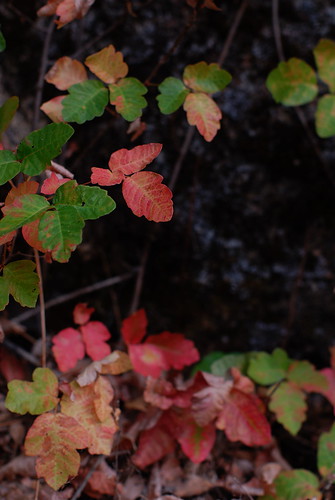
What you see here is poison oak also known as "Toxicodendron diversilobum". It can be found in much of California. The reason it is called poison oak is that there is an oil within the plant called "Urushiol" which causes mild to extreme itching if you get it on your skin. There are a number of home and commercial remedies (the cheapest is probably washing with VERY hot water - this releases and depletes the histamines which cause itching) but the best thing is to just avoid contact altogether.
From the picture you can see several of the key characteristics. The three leaves are one of the most well known identifiers and there is even a rhyme "leaves of three, let it be" to help remember. Oak leaves have a similar shape but do not come in groups of three. Poison oak also grows on a woody vine and frequently climbs trees or stands as a low bush. The color is also a good indicator. It is green in spring and gradually turns reddish and then brown in the fall. When green the leaves are a bit shiny, but as they age they lose some of the shine.
Poison oak can also be recognized by the small white berries it produces. They are about the size of a pea. But you don't need to see the berries to know it is poison oak. The leaves tell the whole story.
If you have come in contact with poison oak, the best thing to do is wash as soon as possible. Because the urushiol is an oil, use soap or other detergents when washing. Water alone won't help much in removing it from your skin. The sooner you wash the better because once it starts to soak into your skin, it won't be easy to get it off.
It can contaminate clothing as well, so if you have been through an area with a lot of poison oak, make sure to wash them well.
All in all, the best strategy is to be able to identify it, and then avoid it.